




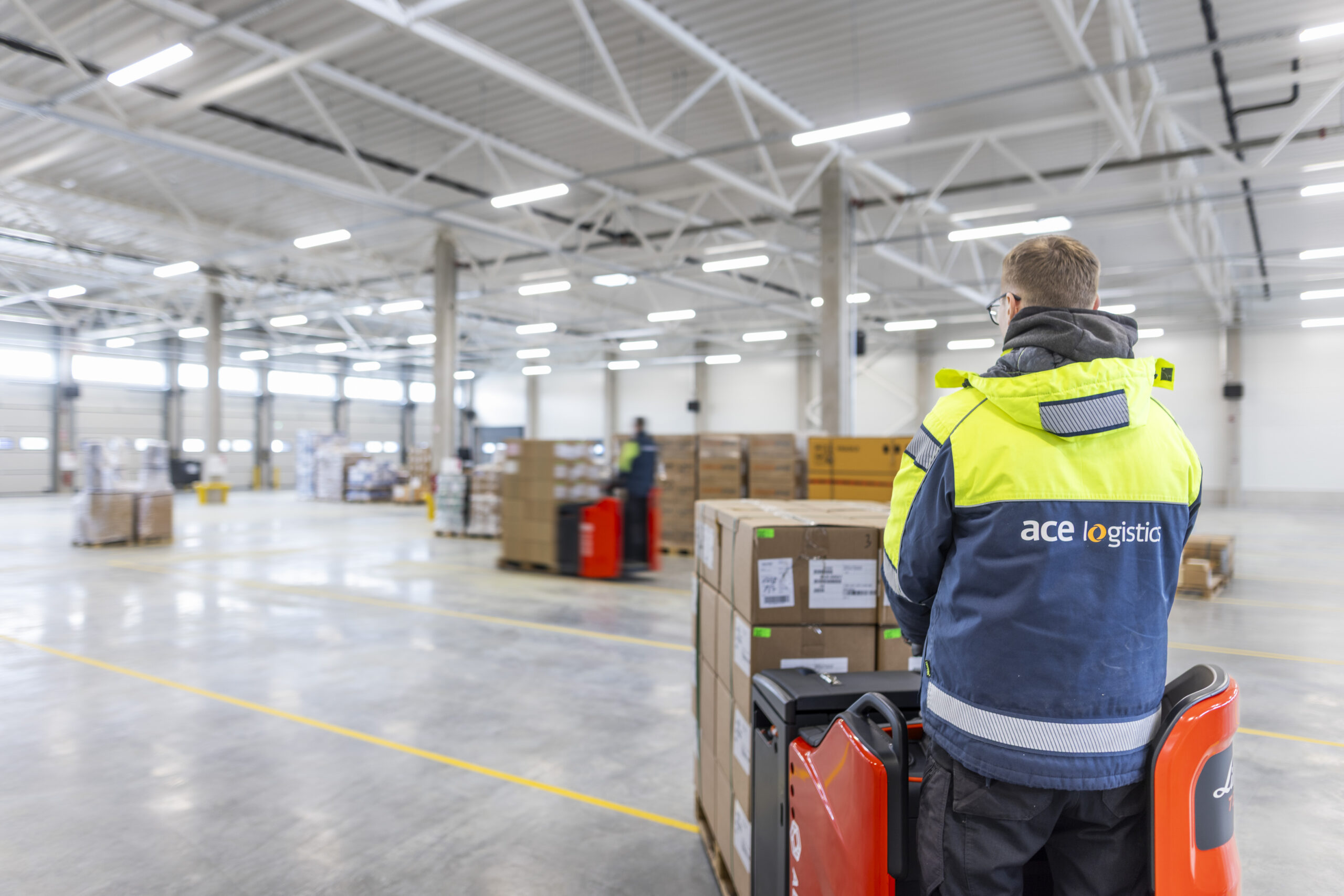
A new ACE Logistics UAB terminal has started operations in Kaunas following an investment of EUR 7 million. It is the company’s second logistics center in Lithuania, after its existing branch in Vilnius. The new facility features 40 loading ramps and was designed with growing cargo volumes and planned service expansion in mind – the company expects annual sales growth of 20%.
According to Juana Kudarauskienė, Head of ACE Logistics, the Kaunas terminal will enable better cargo flow management and help the company prepare for increasing intensity in international transport. It is long-term infrastructure that must operate efficiently both today and as volumes grow in the future.
“When planning the terminal, our goal was to optimize day-to-day operations: fewer unnecessary movements, clearer process logic, and greater control over both workflows and safety. The new terminal will significantly increase our handling capacity and reduce transit times, contributing to higher service efficiency,” she says.
More Than 4,000 sq m of Space
The new Kaunas terminal covers more than 4,000 sq m, including a 4,000 sq m terminal area and a 500 sq m office space. The layout is designed not only for operational efficiency but also for clearer cargo movement and faster process management for clients – especially when shipments need to be sorted and dispatched onward without additional storage.
“It was important for us that the facility would be suitable not only for day one but also for future growth – some solutions were implemented to make expansion easier later on,” notes the company’s head.
Solutions That Reduce Bottlenecks
The terminal includes 36 standard loading ramps, two ramps for vans, and a special covered side-loading ramp that allows trucks to be loaded from the side. This provides greater flexibility when cargo is more accessible from the side and helps ensure safer maneuvering during peak operations.
J. Kudarauskienė emphasizes that in terminals of this type, smooth flow management and minimizing congestion in loading areas are essential. When cargo is not stored but quickly sorted and dispatched onward, throughput capacity and clear loading logic become critical.
Smooth operations: lighting, safety and continuity
Natural daylight is increased through practical design choices: windows are integrated into the roof and near the loading areas, and the dock canopy is translucent. An LED lighting system with motion and daylight sensors is also installed. Engineering systems are integrated into a building management system, enabling centralized control of lighting, indoor climate, and energy consumption. The building is heated using energy of which 90% is generated from renewable sources, and the roof is prepared for the future installation of a solar power plant.
For day-to-day safety, the facility is divided into two sections; windows in movement zones improve visibility, and areas are marked by direction as well as safety lines. Impregnated flooring minimizes dust accumulation and simplifies maintenance.
To ensure continuity of operations, the terminal uses forklifts equipped with lithium-ion batteries and integrated weighing scales that record cargo weight on the spot. Video surveillance cameras are installed throughout the building and across the yard perimeter, and a backup generator is in place in case of power outages.
“When cargo flows are moving, everything must function reliably and without disruption – from weighing shipments to securing power supply,” notes J. Kudarauskienė.
International Transport Volumes Are Growing
Speaking about the market context, J. Kudarauskienė notes that the strongest growth trends are visible in international transport.
“We see growing volumes of smaller shipments in international transport. Companies are increasingly moving away from large stockpiles and instead calculate what they need here and now, making regular and fast delivery essential. Our daily departures and deliveries across Europe allow clients to plan flexibly, shorten lead times, and maintain stable inventory levels. In addition, regular weekly consolidations from overseas markets help optimize costs and ensure consistent cargo flows into Europe. This allows clients to maintain supply chain balance even in a volatile market,” she concludes.